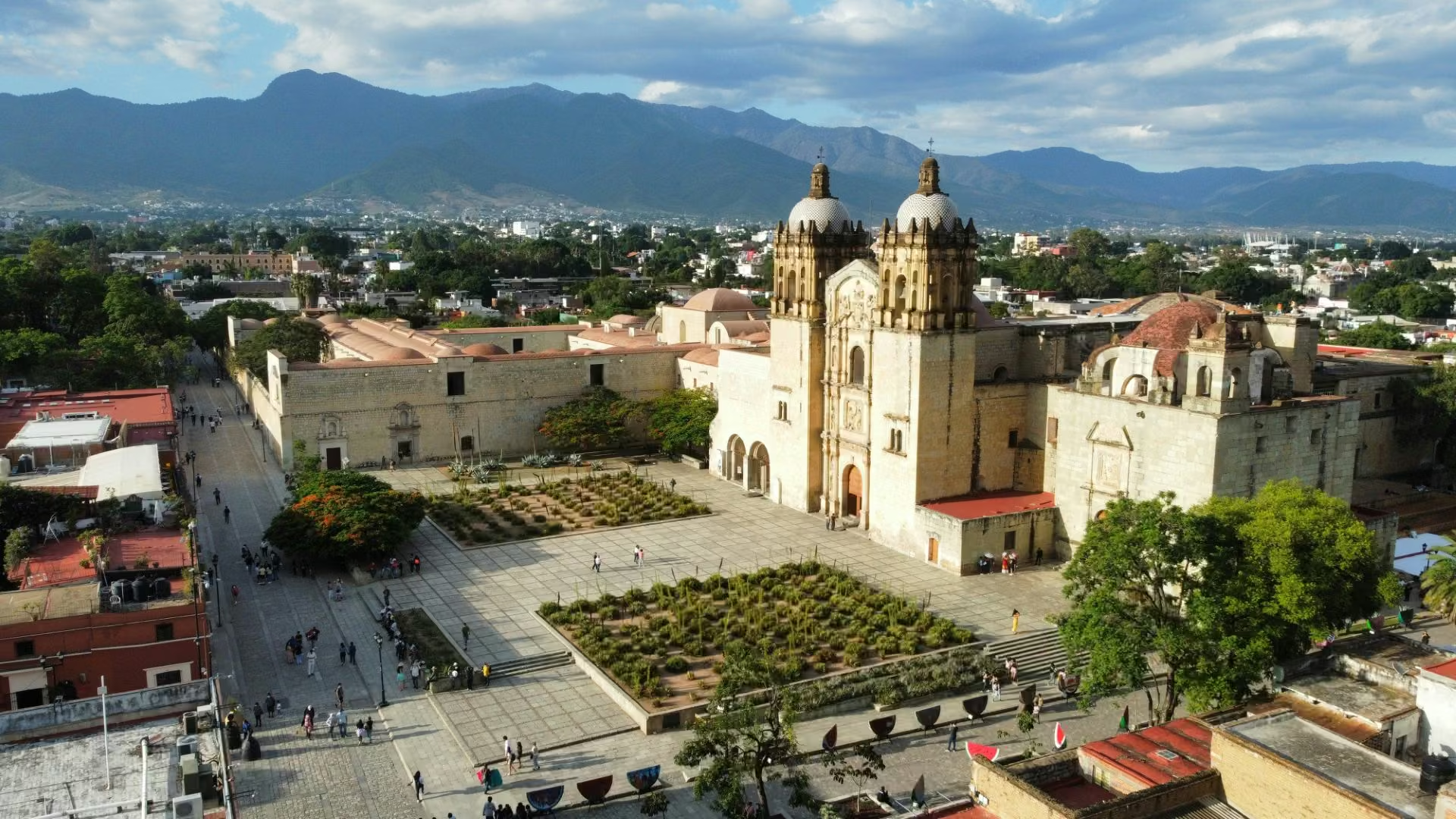
Mexico City's grand Day of the Dead parade, the one with the giant skeleton floats marching down Paseo de la Reforma, is younger than most of the tourists watching it. It didn't exist until 2016. The city built it the year after the James Bond film Spectre opened with a fictional version of exactly that parade.
So if you're weighing up Oaxaca vs Mexico City for Day of the Dead, that's the first thing worth knowing: one of these celebrations was invented for the screen, and the other has been quietly happening in cemeteries and courtyards for generations.
This isn't an argument that Mexico City gets it wrong. It's about what you're actually looking for. By the end of this you'll know which city fits the trip you have in mind, and the exact dates in Oaxaca that are worth building a trip around.
Where is the best place to celebrate Day of the Dead in Mexico?
There are four places most travellers end up choosing between, and they offer very different experiences.
- Oaxaca City: candlelit cemetery vigils, neighbourhood parades, and the deepest concentration of living tradition. The choice for travellers who want to be close to the celebration rather than watching it from behind a barrier.
- Mexico City (CDMX): the big parade, public ofrendas across the city, and an enormous amount happening at once. Spectacle on a grand scale.
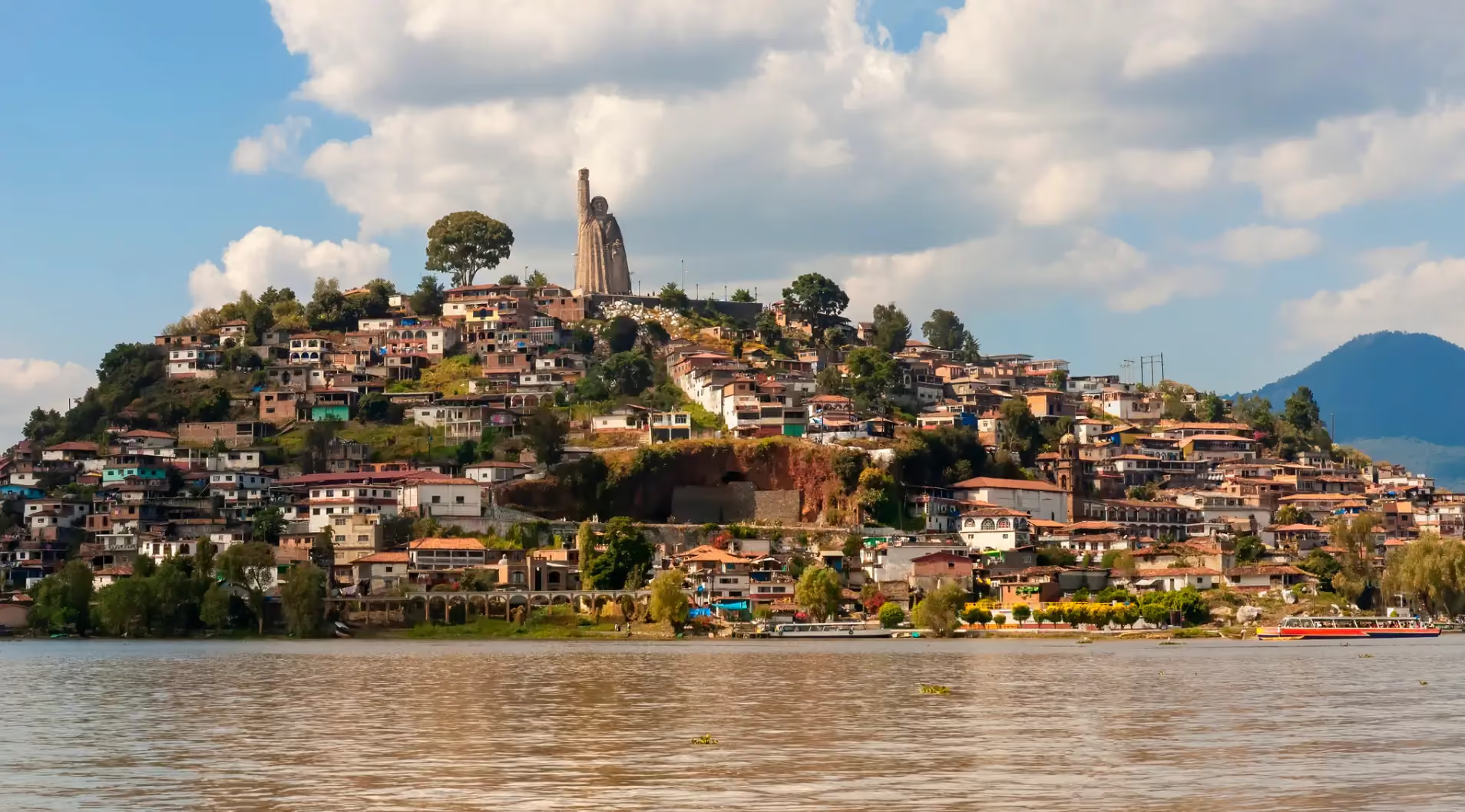
- Pátzcuaro, Michoacán: famous for the candlelit boats and island cemetery ceremonies on Lake Pátzcuaro. Intimate, slower, harder to reach.
- San Andrés Mixquic: a village on the edge of Mexico City where the cemetery fills with candlelight on the night of the 2nd. Traditional, and easy to combine with a CDMX trip.
For most people the real decision is the first two. So let's deal with it properly.
Oaxaca or Mexico City: which is more "authentic"?
It's a fair question, and the honest answer comes back to that parade.
Before 2015, Mexico City had no Day of the Dead parade at all. The opening sequence of Spectre showed one anyway: Daniel Craig chasing a villain through crowds of costumed revellers and towering skeleton puppets across the Zócalo. The scene was pure fiction. The following year, the city decided to make it real, holding its first official parade on 29 October 2016 and openly describing it in press materials as a "Spectre-style" event. It has grown every year since.
Mexico city celebrations are still worth attending. The parade is impressive, the public ofrendas have some beautiful work put into them, and the city throws everything it has at the season. If you want a spectacle and sheer production value then CDMX is for you.
But it's a show. And it's young.
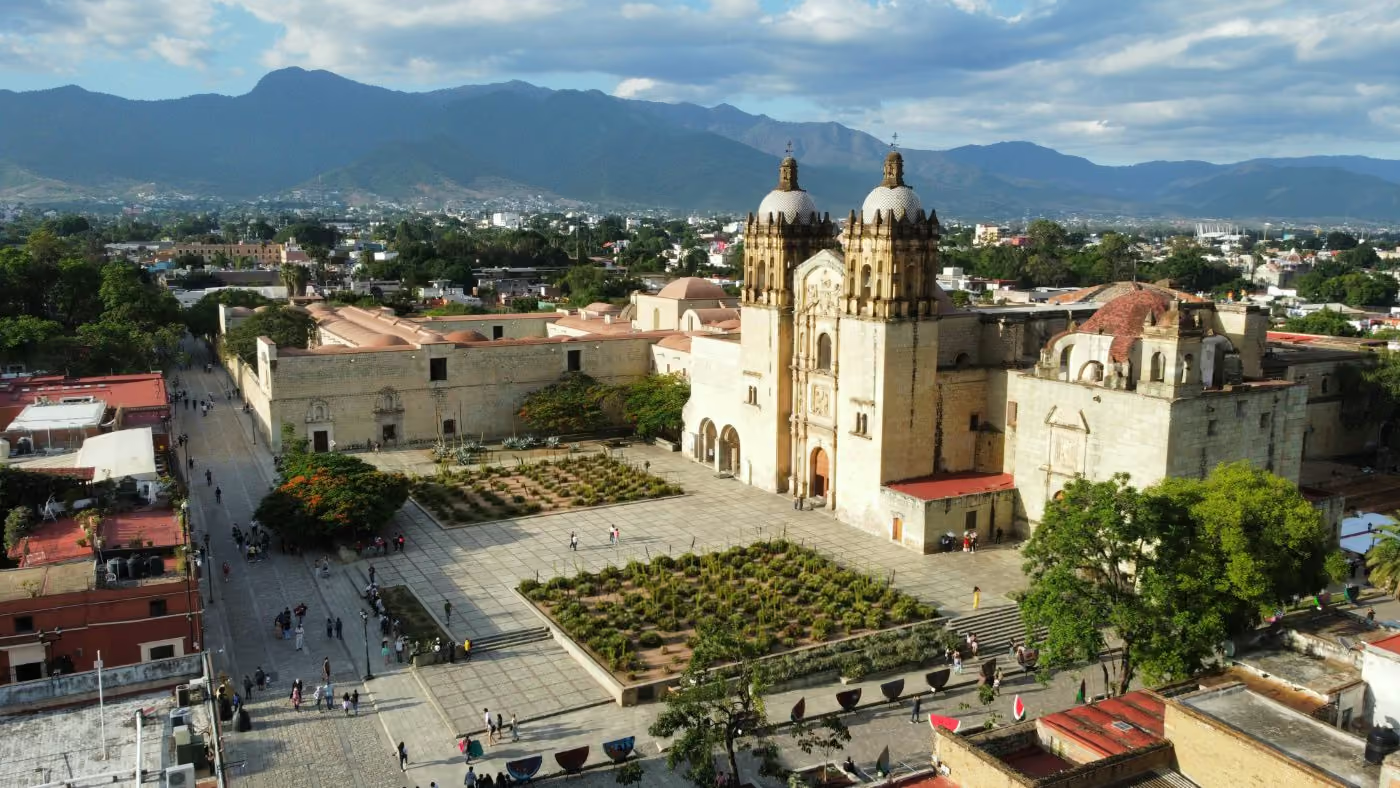
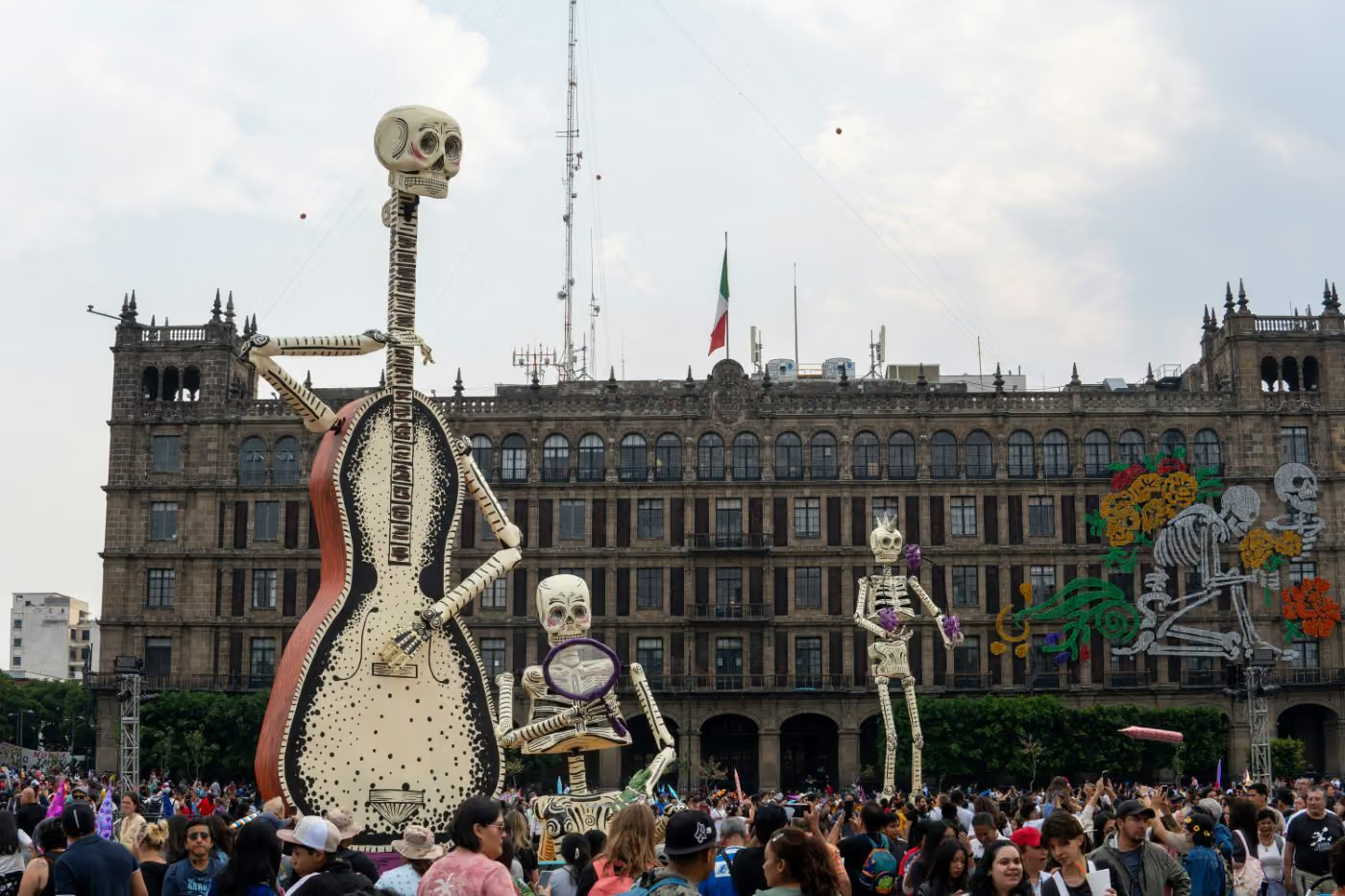
Oaxaca is the opposite. The celebration here didn't come from a film. It grew out of Zapotec and Mixtec tradition and never stopped. There's no single set-piece to photograph and tick off. Instead the whole city centre changes for a week: altars built into doorways, comparsas winding through the streets after dark, families filling the cemeteries through the night. You're not in the audience. You're a guest at something that was always going to happen whether you showed up or not.
A quick note on the word panteón (pan-teh-ON), the cemetery. You'll hear it constantly in Oaxaca during these days. When a local asks "¿vas al panteón?", they're asking which cemetery you're heading to that night. It's worth knowing, because the panteones are where the real heart of the celebration is.
The numbers back up how seriously Oaxaca takes the season. Sectur Oaxaca reported that the 2024 celebrations brought roughly 89,000 visitors and around 360 million pesos to the city over seven days, with hotel occupancy peaking at 94% on 1 November. Across the country that year, federal tourism figures put Oaxaca at the highest hotel occupancy of any destination in Mexico (83.4%), ahead of Mexico City itself.
If you have time and the budget, you can do both: the parade weekend in CDMX, then the main nights in Oaxaca. Plenty of travellers do exactly that. But if you can only choose one, and depth matters more to you than spectacle, Oaxaca is the answer.
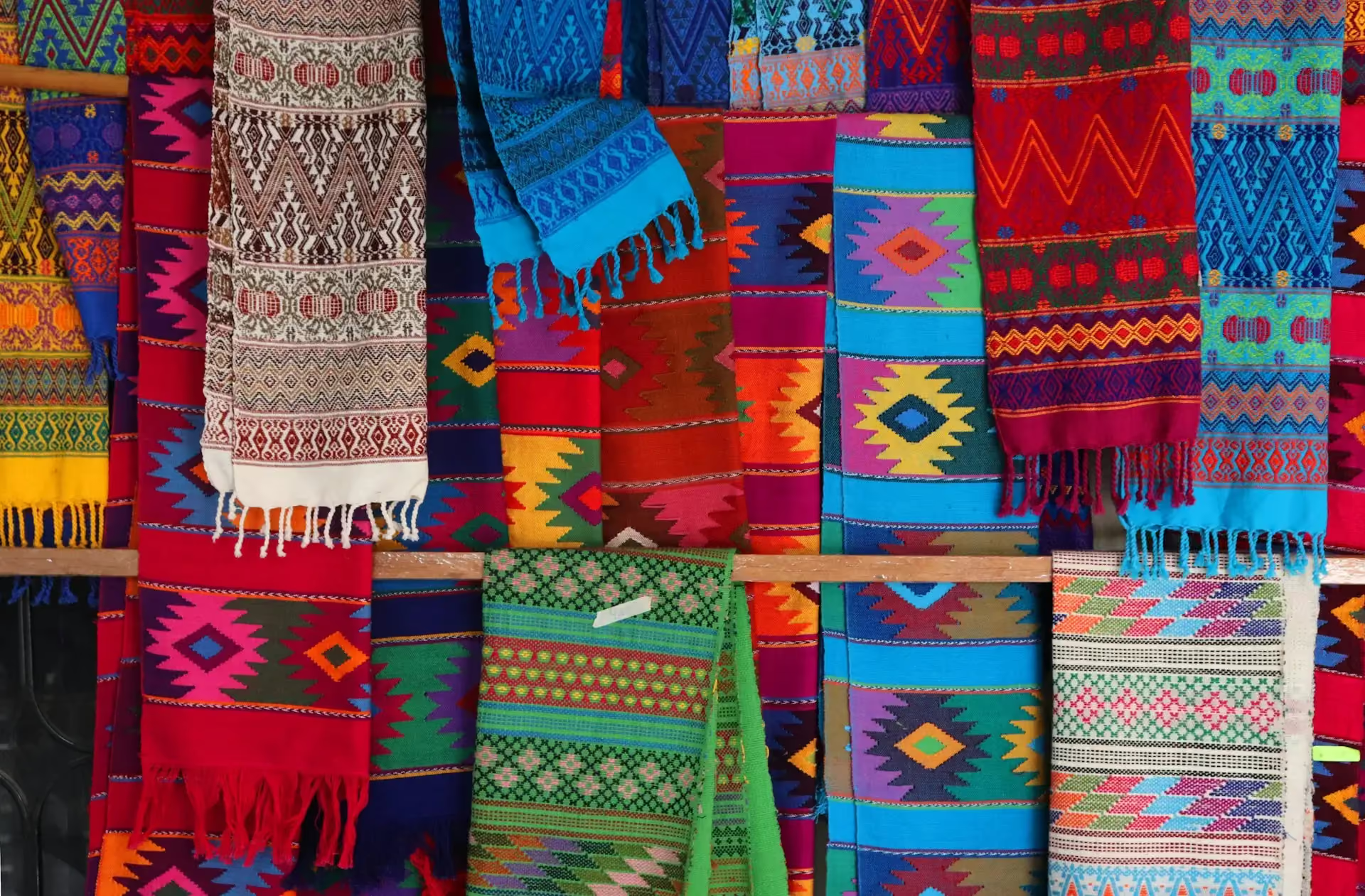
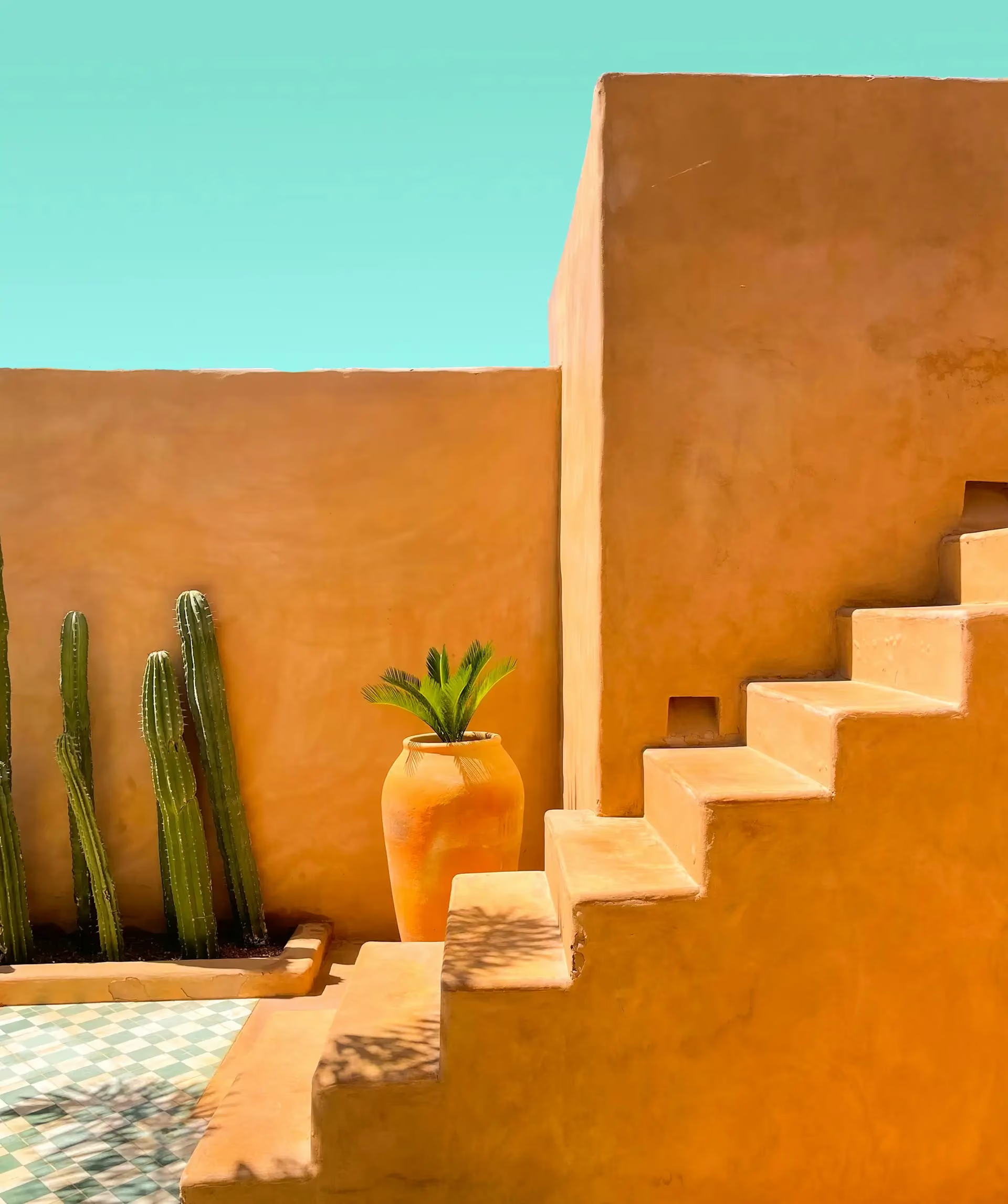
What makes Oaxaca different
Three things set Oaxaca apart, and they're worth understanding before you go.
The history
The central valleys are primarily Zapotec territory, with deep Mixtec influence. This is old ground. The celebration here draws on traditions that long predate the Spanish, including reverence for Pitao Bezelao, the Zapotec deity associated with the underworld. When people in Oaxaca talk about honouring the dead, they're standing on a much older foundation than a Catholic calendar date.
The food
Oaxaca is one of the great food regions of Mexico, and Day of the Dead is when it shows off. Tlayudas the size of a steering wheel, stringy Oaxaca cheese (quesillo), mole in half a dozen varieties, pan de muerto, hot chocolate, and chapulines (toasted grasshoppers) sold by the cup in the markets. The Mercado 20 de Noviembre is the obvious place to eat your way through it. This isn't a side note to the trip; for a lot of travellers the food is the trip.
The comparsas and muerteadas
This is where Oaxaca's celebration really lives, and you won't find it in a tourist brochure.
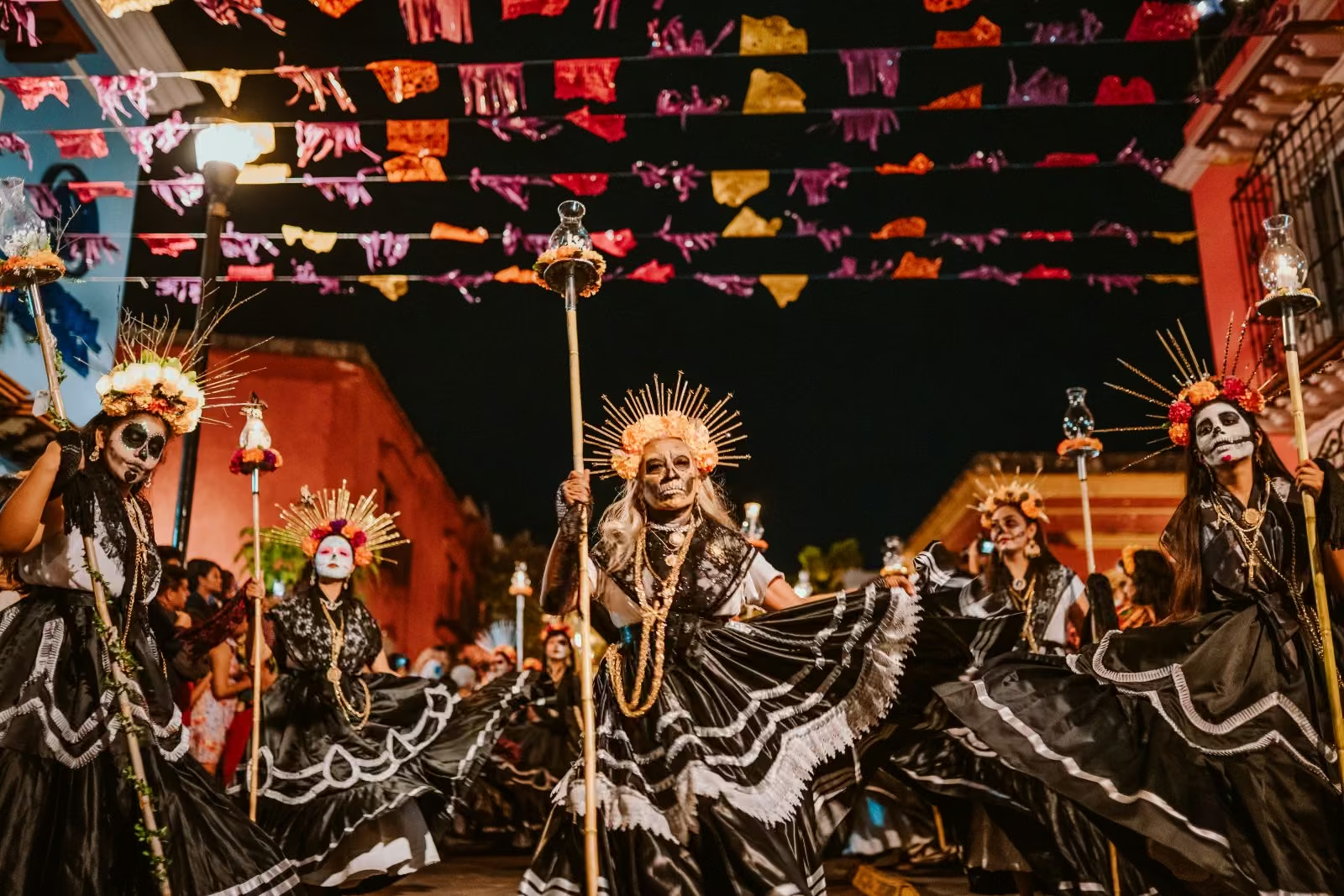
Comparsas are neighbourhood parades, usually starting around the 28th to the 31st of October. Each barrio organises its own. Participants wear regional dress, faces painted as Catrinas or hidden behind fearsome masks, dancing through the streets behind a live band. One of the biggest runs through the centre of Oaxaca de Juárez, with traditional dances, marmotas (giant spinning puppets) and live bands drawing thousands.
Muerteadas are the all-night version, and they're said to have started more than 80 years ago, especially around San Agustín Etla. On the night of the 1st, locals come out dressed as old men, widows, priests, skeletons, witches, and devils, dancing to banda music to welcome the souls of the dead. If you can get to one, do.
When to go: the dates that actually matter
The official window in Oaxaca is 31 October to 2 November, with the main nights falling on the 1st and 2nd. But the most meaningful moments sit at the edges of that, and most first-timers miss them.
- The velada, the night of 31 October. In the villages of Santa Cruz Xoxocotlán and Santa María Atzompa, just outside the city, families hold the velada: arriving at the cemetery in the early hours and staying all night until dawn to receive their dead. This runs from the night of the 31st into the morning of the 1st, earlier than the city celebrations, and in many ways more moving. (Detail shared with us by a local contact in Oaxaca; name to confirm before publishing.)
- The flower fields, roughly 22 to 28 October. Before the celebration even begins, the cempasúchil (marigold) fields come into bloom. Growers around Zimatlán de Álvarez, Unión Zapata, and Nazareno near San Bartolo Coyotepec open their fields to visitors. If you arrive a few days early, this is one of the best things you can do with the time.
- 1 and 2 November, the main nights. This is when the panteones fill with candlelight, music, and food, and the city is at its fullest. Book accommodation months ahead; the good places sell out early.
Beyond the city: what else is nearby
One of Oaxaca's quiet advantages is everything within an hour or two of the centre. If you build in a free day or two, you can reach:
- Monte Albán: the Zapotec hilltop ruins overlooking the valley.
- Mitla: intricate stone mosaic work, and a site long tied to the dead.
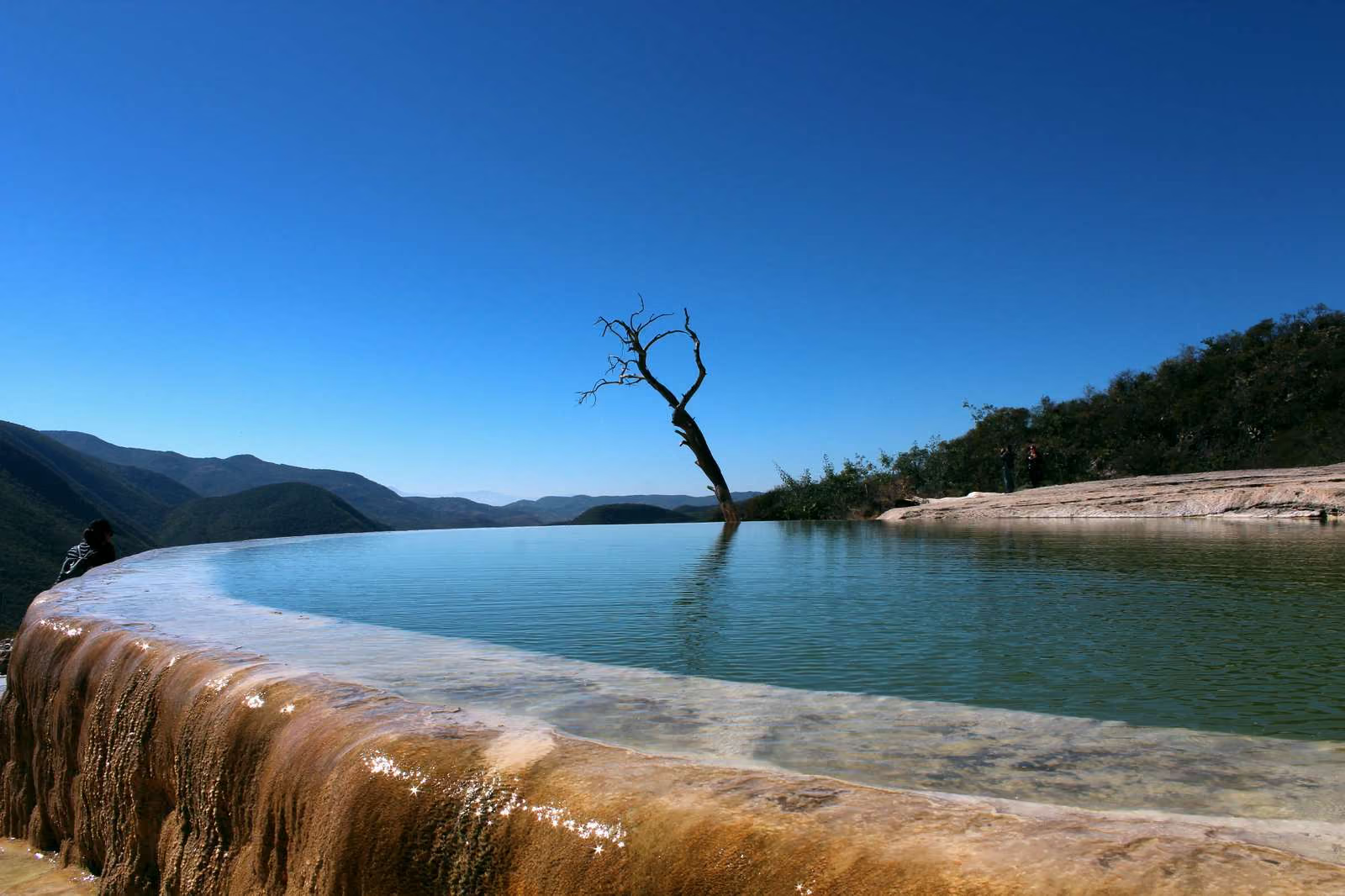
- Hierve el Agua: the petrified "waterfall" mineral springs.
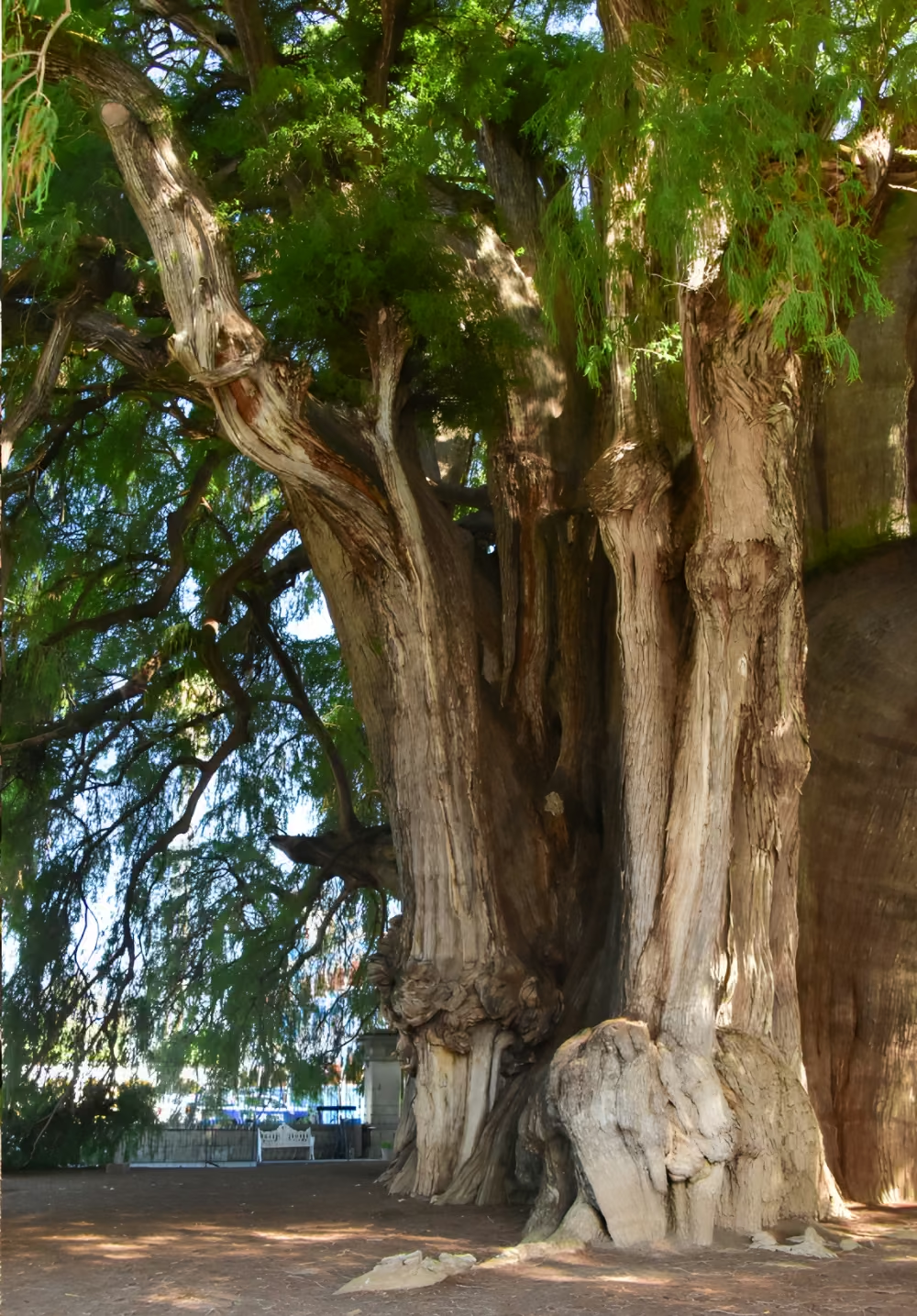
- El Árbol del Tule: one of the widest trees on earth, in nearby Santa María del Tule.
You don't need to see all of them. But it means Oaxaca rewards alonger stay in a way a parade weekend never could.
A note from us
Walking the streets of Oaxaca during these days, what stays with you isn't a single spectacle. It's the accumulation of small things. The labour and love in an altar tucked into a doorway. A street vendor's stall you didn't expect. The cemeteries at night, full of families sharing meals and music rather than grief. That's the experience this site exists to help you reach, and to reach respectfully.