Walk through Oaxaca at the end of October and the city rearranges itself around a handful of objects. Marigolds in the doorways. Cut paper strung between balconies. Smoke curling out of small clay burners. Bread you can smell from a block away.
To an outsider it reads as decoration. It isn't. Almost every element of Día de Muertos is functional — it exists to solve a problem in a very old logistical puzzle: how do you help someone find their way home when they no longer have a body to do it with?
Once you understand that, the whole thing snaps into focus. The flowers are a signal. The paper is a doorway. The bread is a welcome. The dog is a guide.
Here's what each symbol is for.
A note on the name
You'll see this holiday written as Día de los Muertos almost everywhere in English. In Mexico, the standard term is Día de Muertos — no los. The longer version is the one that travelled; the shorter one is the one people actually use.
It's a small thing. But if you're writing about the tradition, or naming something after it, it's worth getting right.
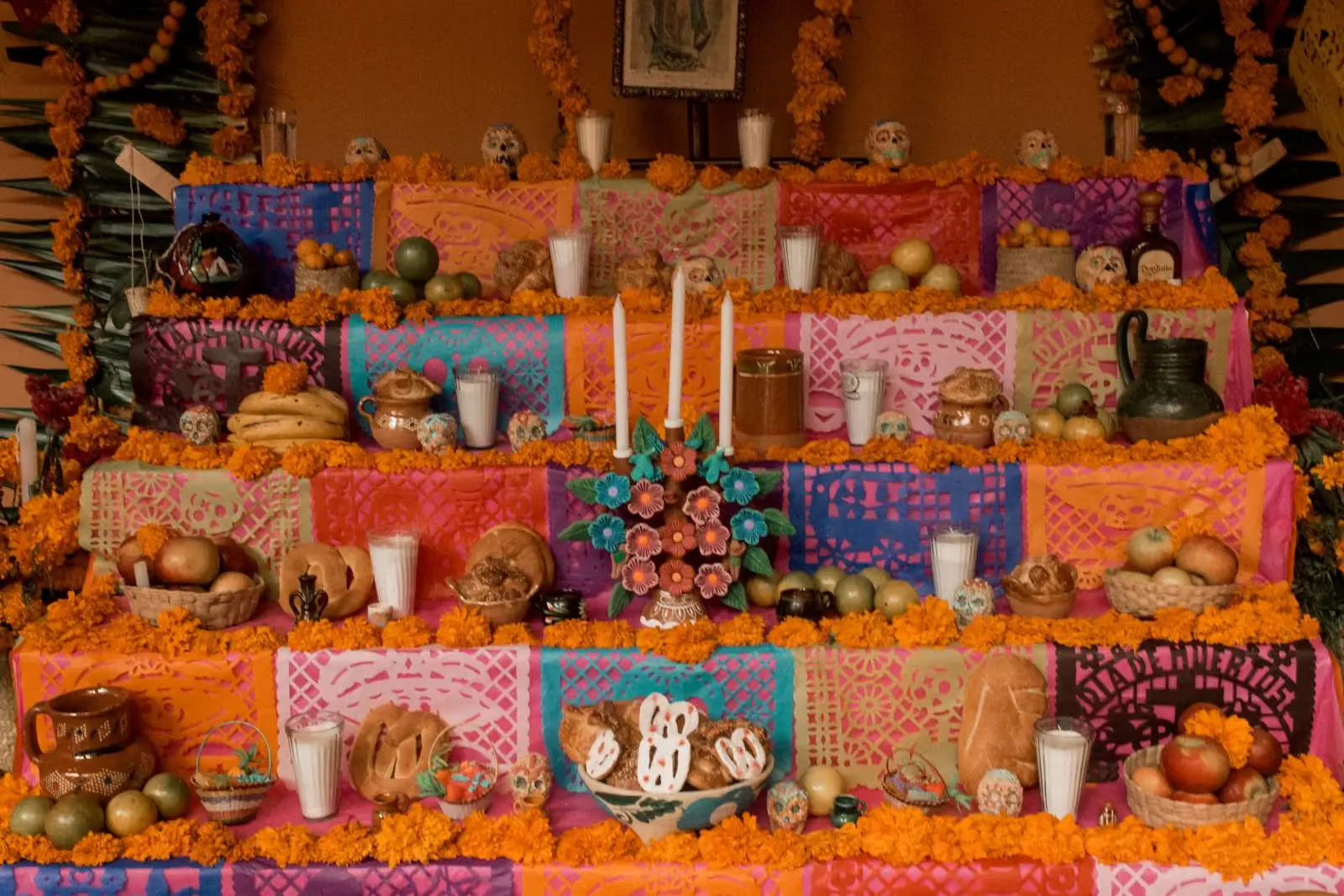
The Altar (Ofrenda)
Everything else on this list lives inside the altar, so start here.
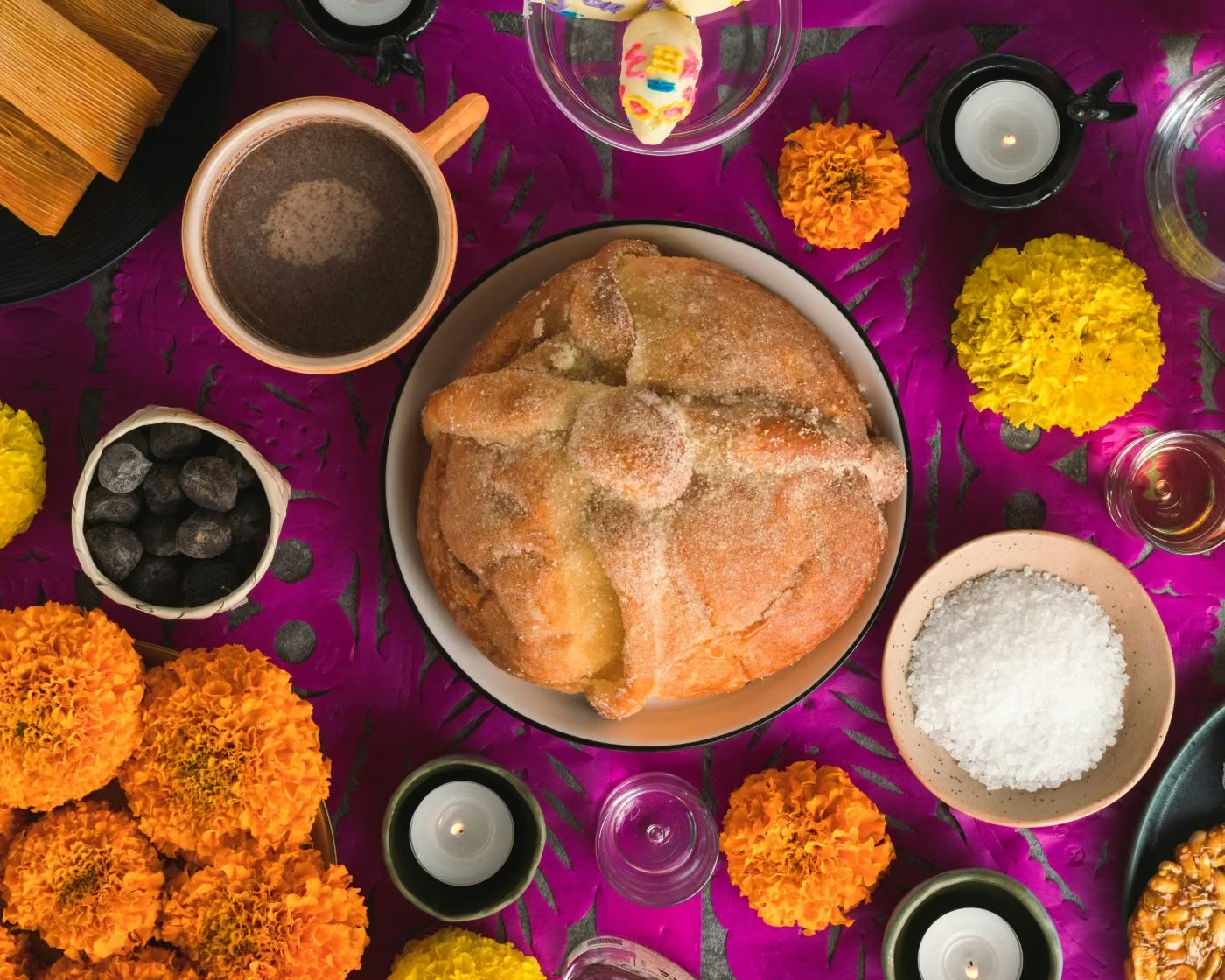
An ofrenda is not a shrine to be admired from a distance. It's a table set for a guest — the same way you'd set one for a relative arriving after a long drive. The word means "offering," and the logic is straightforwardly hospitable: someone is coming a very long way, and they will be tired, hungry and thirsty when they arrive.
Traditional altars are built to include the four elements. Water for thirst. Fire, in the form of candles. Wind, represented by papel picado. Earth, represented by food. Many are built in tiers, and the number of levels carries meaning that varies by region and by household — two for heaven and earth, three when purgatory is included, seven for the stages of the soul's journey.
Then there are the things that make it a particular person's altar rather than a generic one. A photograph, so the dead can see that a place has been kept for them, and so that younger relatives learn faces they never met. Personal objects — a jacket, a book, a favourite necklace, a child's toy. A tablecloth, usually white for purity, though families increasingly use textiles that say something about where the person came from. Salt for purification. Dirt or ash, sometimes shaped into a cross, as a reminder that we return to what we came from. In parts of Michoacán, an empty chair, so the soul has somewhere to sit down.
Some altars keep going after the holiday. Some are dismantled on 3 November. There is no single correct way to build one, which is the first thing most guides get wrong.
Marigolds (Cempasúchil)
The flower does the navigation.
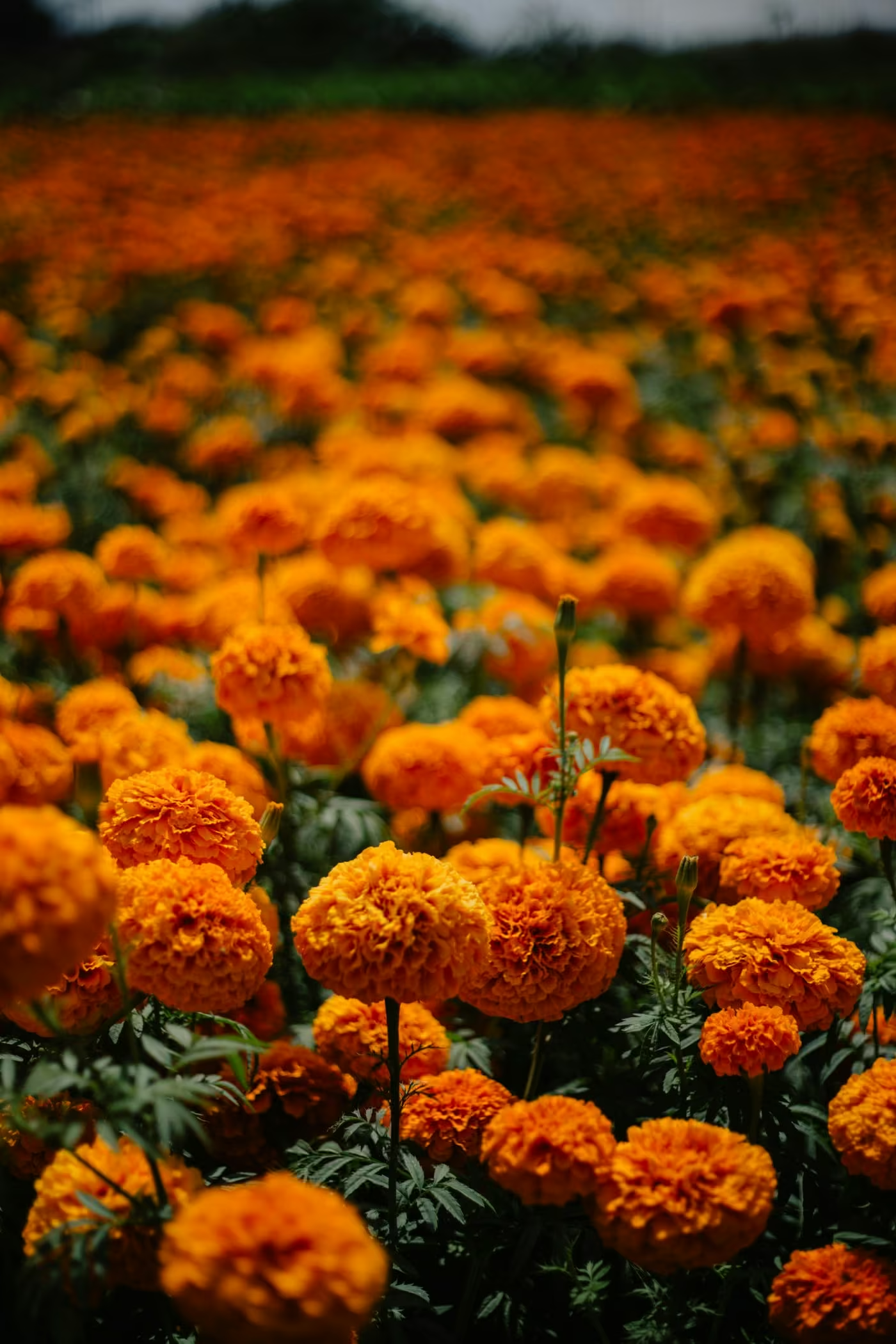
Cempasúchil comes from Nahuatl — roughly, "flower of twenty petals." It's native to Mexico, and it's the one non-negotiable element on almost every altar in the country. The belief is that its colour and, more importantly, its smell guide the dead home. Marigolds have a sharp, musky, slightly medicinal scent that carries; you notice it before you see the flowers.
That's why you'll see petals scattered in a path — from the street to the front door, from the door to the altar, sometimes from the cemetery gate to a particular grave. The path is not symbolic decoration. It's a set of directions.
In Oaxaca in late October, trucks come down from the growing villages loaded with them, and the whole city goes orange for a week.
Marigolds aren't the only flower. Cockscomb (cresta de gallo, also called flor de terciopelo — the velvet flower) is the common second, deep red and soft to touch, associated with comfort after a loss. Flor de nube (baby's breath) is used on angelito altars for children, white for innocence. You'll also find siempre vivas, purple everlastings that don't wilt, and clemolitos, a drier, redder cousin of the marigold.
Copal
Copal is a pale tree resin, burned as incense in Mesoamerica for thousands of years. The word comes from the Nahuatl copalli, meaning incense.
Where marigolds handle sight and smell at ground level, copal works upward. The smoke is understood to carry the invitation, to purify the space before the guests arrive, and to help them locate the household. It's also used medicinally — for anxiety, for coughs, for aches.
If marigolds are the visual signature of Día de Muertos, copal is the olfactory one. It's the smell people describe when they talk about being homesick for the season.
Palo santo — "sacred wood," found in the Yucatán — is sometimes used as a substitute, with a softer, woodier smoke.
Candles
Candles are fire, one of the four elements, and they light the road.
White is the traditional colour: a clean light for the path home. Purple carries mourning and the link between the living and the dead. In some Indigenous communities the number of candles on the altar corresponds to the number of souls the family expects to receive — which turns a decorative choice into a headcount.
Oaxaca has its own specialty here. In Teotitlán del Valle, artisans hand-make elaborate beeswax candles, sometimes shaped as skulls and worked with flowers, that can stand in for sugar skulls entirely. They are among the most beautiful objects in the whole tradition and almost never make it into international coverage.
Papel Picado
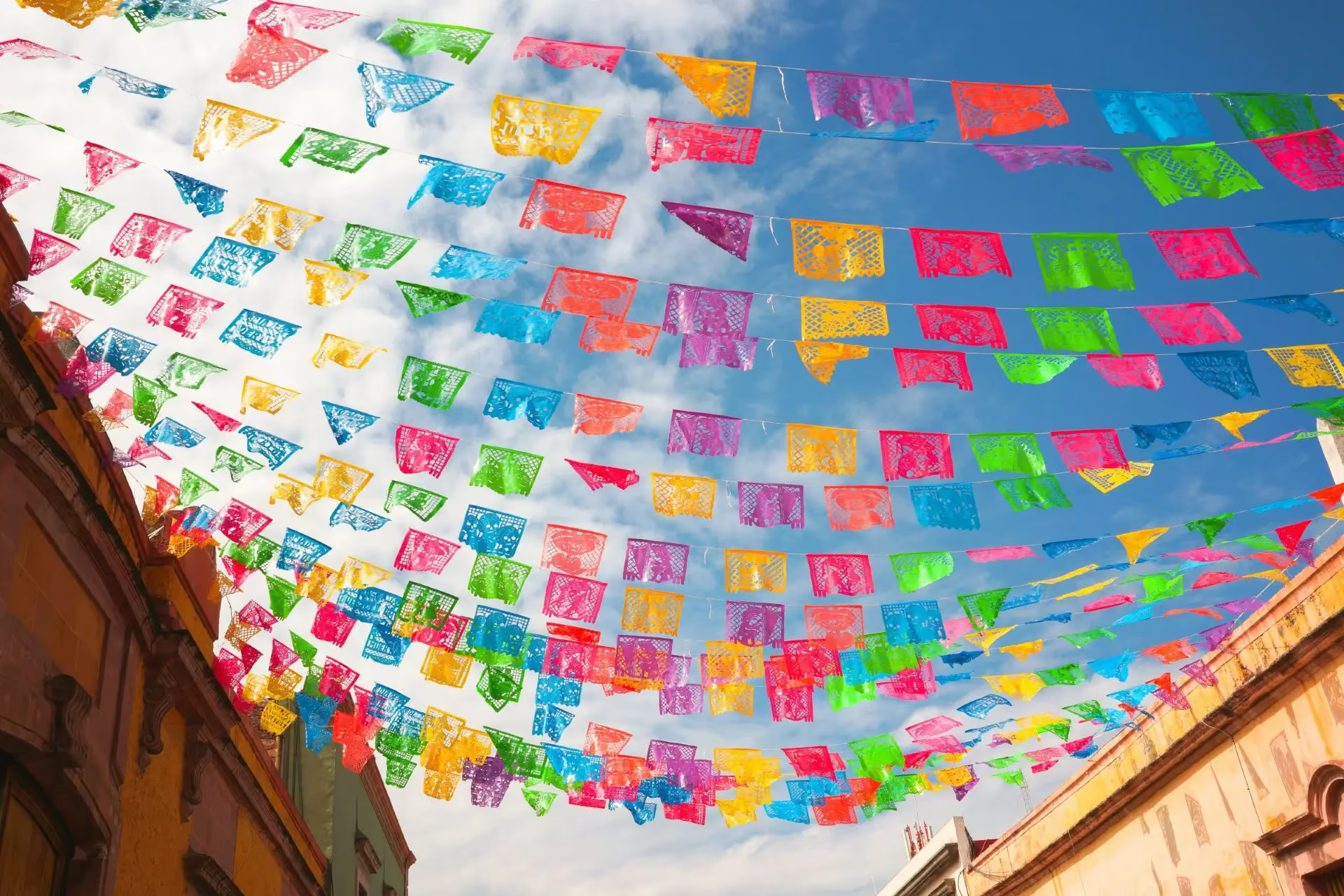
Perforated tissue paper, cut into skeletons, flowers, animals and lettering, strung in garlands across streets and above altars.
It represents wind — one of the four elements — and the explanation for the holes is lovely and literal: they let the souls pass through. The paper is fragile and it tears, which is the point. It stands for the fragility of life. Purple and yellow dominate during Día de Muertos: mourning and purity.
When there's a breeze and a whole street of it is moving at once, you understand why people describe the season as arriving rather than being scheduled.
Pan de Muerto
Bread of the dead. It exists only during the season, which is part of why it matters.
The dough is wheat flour, egg, sugar, anise, and orange zest or orange blossom water. The loaves are round, topped with strips of dough shaped like crossed bones, and dusted with sugar. Every part of that is doing work: the round shape is the cycle of life and death, the bones are the departed, the orange blossom aroma helps guide the spirits in, and the sugar stands for the tears of the living.
Every region bakes it differently. In Oaxaca you'll find pan de yema, an egg-yolk bread often decorated with a small painted ceramic face, which is a genuinely distinct tradition rather than a variation.
Sugar Skulls (Calaveras)
The souvenir-shop icon, and the most misunderstood object on the list.
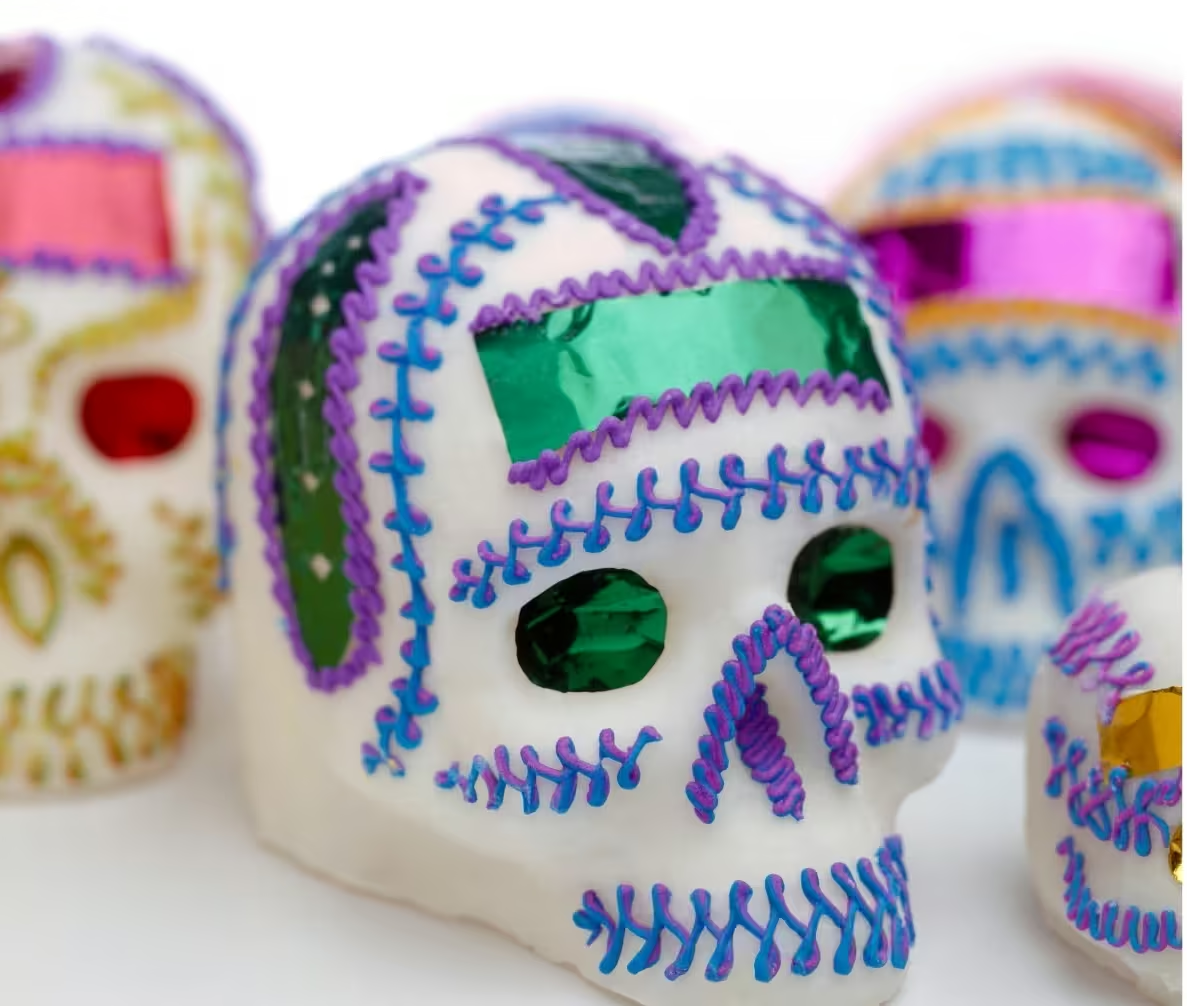
Sugar skulls are placed on altars carrying the name of the dead person on the forehead. Small skulls for children, larger ones for adults. They are made from alfeñique, a sugar paste pressed into moulds and decorated, though you'll also find versions in chocolate, amaranth and clay.
Two things surprise most first-time visitors. First, they're not really meant to be eaten — a well-kept sugar skull will sit on an altar for years. Second, they're also given to the living. Receiving one with your name on it isn't a threat; it's closer to I love you, with an undertone of saving you a seat in Mictlán for whenever you get there.
The origins are contested. Some historians point to the tzompantli, the pre-Hispanic racks on which skulls were publicly displayed. Others credit the Spanish, who brought both sugar and the Arab alfeñique technique to Mexico. The honest answer is that the modern sugar skull couldn't exist without both.
Mictēcacihuātl
Before there was La Catrina, there was a goddess.
Mictēcacihuātl was the Aztec queen of the dead, consort of Mictlāntēcutli, and her job was to preside over the festivals of the dead and guard their bones. She's depicted with a skeletal face — that's the thread that runs all the way to the sugar skull and the painted faces you'll see in the street today.
The underworld she ruled, Mictlān, is worth understanding, because it explains why the Mexican relationship with death is so unlike the Catholic one. Mictlān is not punishment. It's simply where most souls end up, after a nine-level journey that takes four years and tests them along the way. And crucially, the Aztecs believed your destination was determined by how you died, not how you behaved. Drowning sent you to Tlālōcān, the rain gods' paradise. Warriors went to the realm of the sun god and came back as hummingbirds. Infants went to a place with a nursing tree.
No heaven earned, no hell deserved. Just a journey everyone makes.
Her festival originally fell in late July and early August, not November. The Spanish moved it. The Codex Telleriano-Remensis records a feast of the dead beginning on the third of August, with offerings placed on tombs for four years — the length of the journey to Mictlān.
La Catrina
The most famous face of the holiday is barely a century old, and she started as political satire.
Under Porfirio Díaz, many upper- and middle-class Mexicans played down their Indigenous ancestry — dressing European, powdering their faces white. Around 1910, the lithographer José Guadalupe Posada drew La Calavera Garbancera, "the chickpea skeleton," a bare skull in a grand European hat. The joke was pointed: strip away the costume and the class performance, and everyone underneath is the same set of bones.
Posada died penniless and was buried in an unmarked grave. He never saw what happened next.
Thirty years later Diego Rivera painted his own version into one of his great murals, dressed her in an ostrich-feather hat, and named her La Catrina — the female counterpart of a catrín, a dandy. That mural turned a cartoon into a national icon.
So when you see people in Oaxaca with sugar-skull makeup and feathered hats, they are not in Halloween costume. They're wearing a hundred-year-old argument about class and identity that has softened, over time, into something more like consolation: in the end, everyone is a skeleton.
Hummingbirds
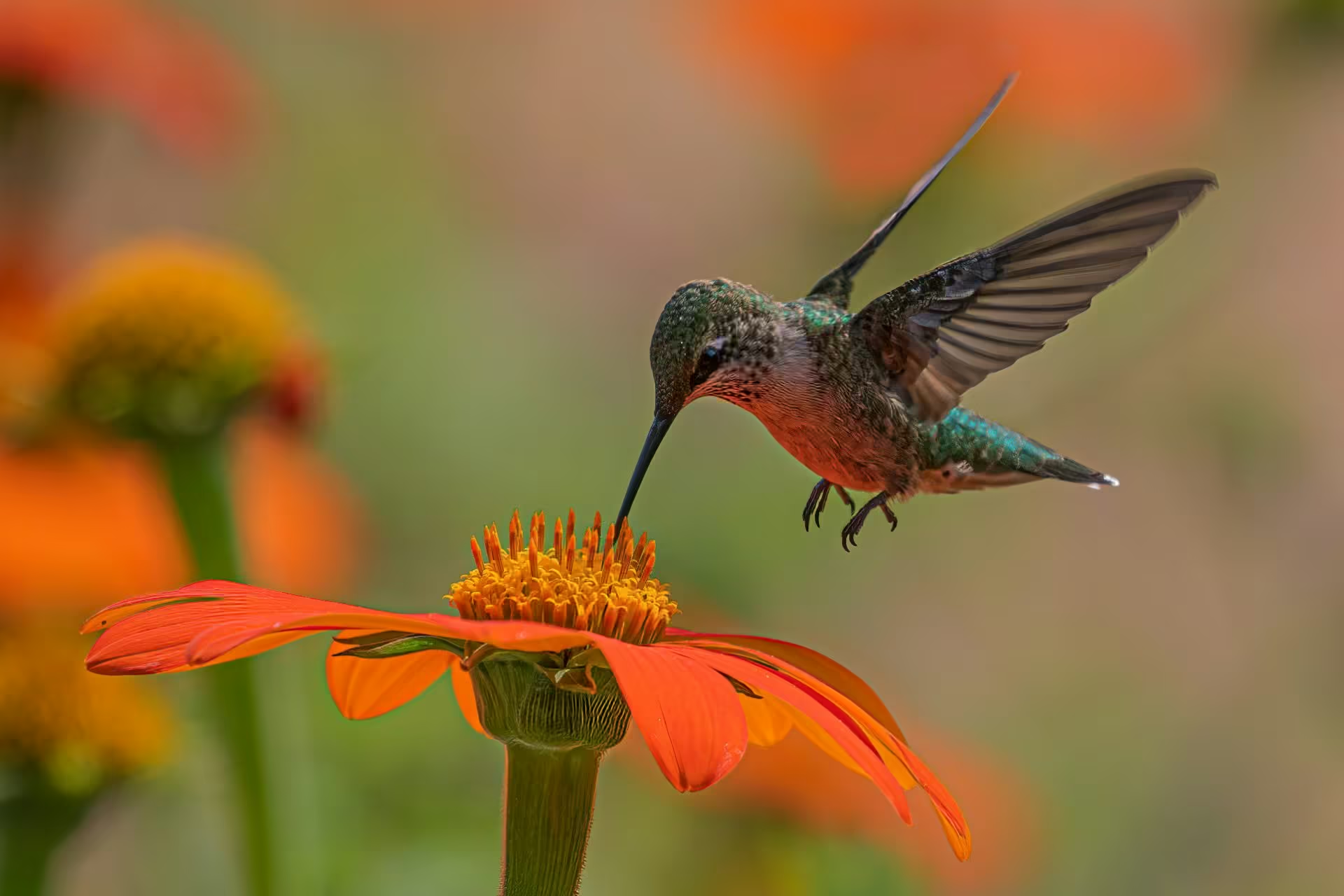
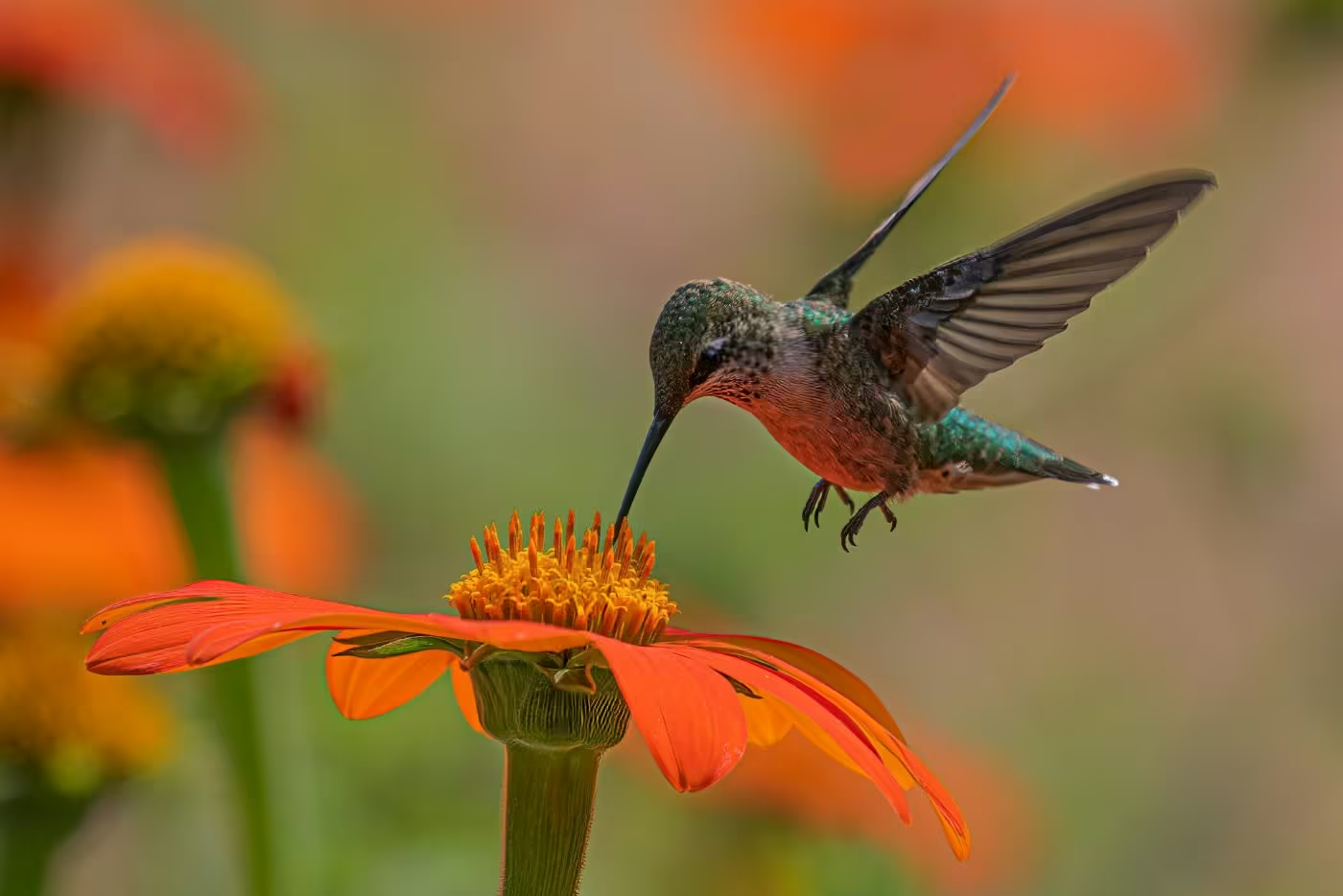
Not a required altar element, but woven deep into Mesoamerican thinking. The Aztecs held that warriors killed in battle were reborn as hummingbirds; the Maya treated them as messengers from the gods.
The modern version is gentler and enormously widespread: when a hummingbird appears shortly after someone dies, many Mexican families read it as that person letting them know they're alright. A hummingbird on an altar almost always means this.
Monarch Butterflies
Every autumn, monarchs migrate from Canada and the United States to the forests of Michoacán — arriving, with almost suspicious punctuality, right around Día de Muertos.
The Purépecha understand them as the souls of the dead returning. It's the same idea as the hummingbird, at continental scale. And there's a detail that makes it hard to shake: monarchs are drawn to marigolds.
They're not a traditional altar requirement. Plenty of families include them anyway.
Xoloitzcuintle
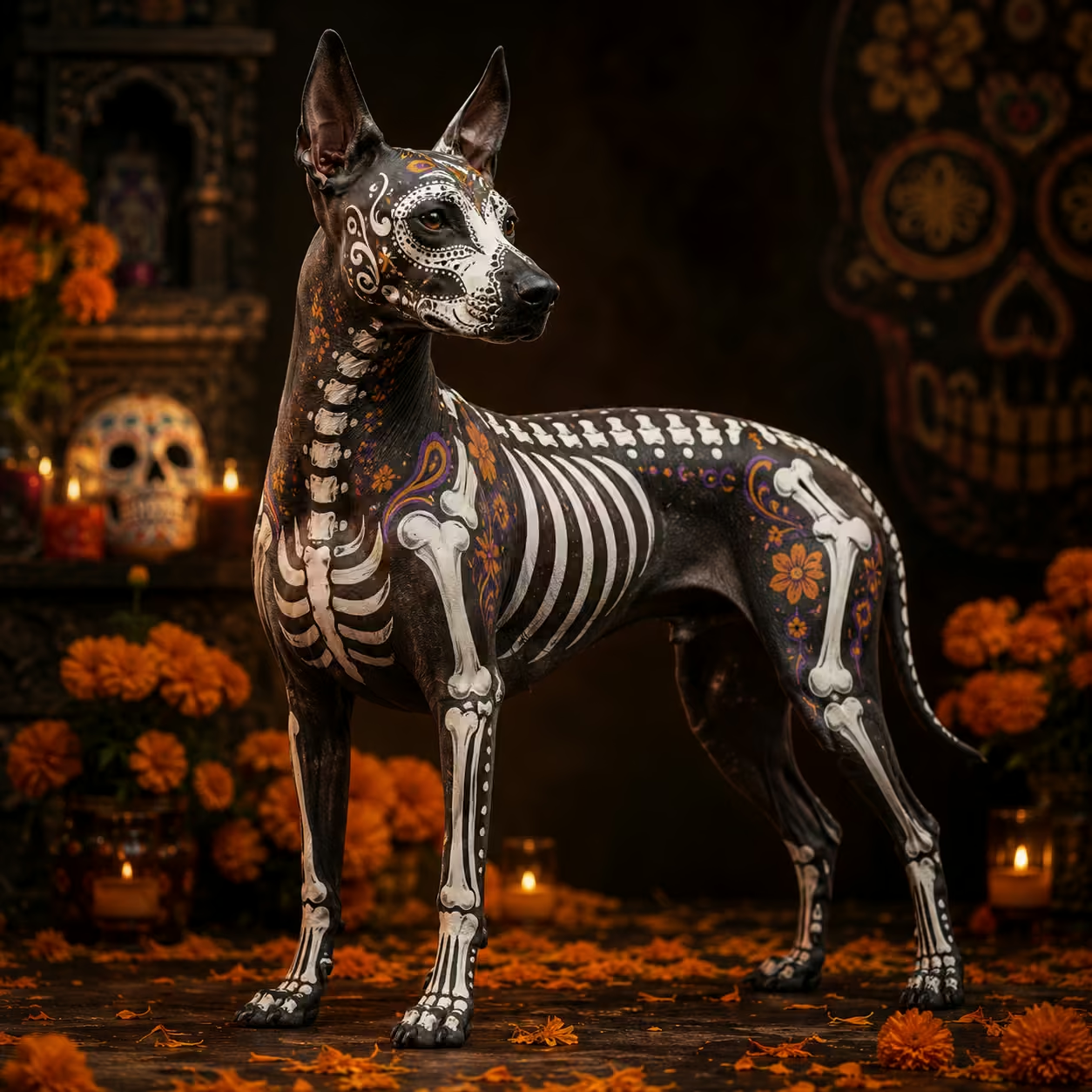
The Mexican hairless dog, a breed roughly 3,000 years old. The name comes from Xolotl, the Aztec god of lightning and fire, and itzcuintli, Nahuatl for dog. Mexicans call them xolos (say sholos).
Their job in Aztec belief was to escort souls through the trials of Mictlān — specifically across the river standing between the dead and their final rest. A Xolo figurine on an altar is there as a guide, not as a pet.
The breed was championed in the twentieth century by artists including Frida Kahlo, Diego Rivera and Oaxaca's own Francisco Toledo, which is part of why it survived at all.
Alebrijes — and an honest correction
Alebrijes are the brilliantly coloured fantasy creatures you'll see everywhere in Oaxaca. Most visitors arrive believing they are ancient spirit guides for the dead.
They are not.
Alebrijes were invented in 1936 by Pedro Linares, a Mexico City cartonero (papier-mâché artist), following a fever dream full of impossible hybrid animals — a donkey with wings, a rooster with bull's horns — that chanted a nonsense word at him. He woke up and started building them. Diego Rivera and Frida Kahlo commissioned pieces, and the form took off.
They are less than a century old, they come from Mexico City rather than Oaxaca, and they have no traditional role in Día de Muertos. The association comes from Coco, which cast them as spirit guides — beautiful filmmaking, invented tradition.
What is genuinely Oaxacan is the carved-wood version, the tallas, made in villages like San Martín Tilcajete and San Antonio Arrazola, which developed alongside Linares's papier-mâché work and became the region's signature craft. Buy one. Just don't tell people it's ancient.
You will, occasionally, see an alebrije on an altar — usually to honour someone who kept animals, or as a stand-in for a pet. That's a modern, personal choice, and a perfectly good one. It's simply not the tradition it's often sold as.
The pattern underneath
Read the list again and a structure appears.
Marigolds, copal and candles are the signal — smell, smoke and light, broadcasting an address. Papel picado is the doorway. Pan de muerto, water, salt and food are the welcome. Photographs and personal objects are the identification, so the right soul finds the right table. Xolos, hummingbirds and monarchs are the escorts. Sugar skulls, La Catrina and Mictēcacihuātl are the faces — the long argument that death is neither shameful nor frightening, just the other half of being alive.
None of it is decoration. It's infrastructure.
And that's the thing worth carrying with you if you're travelling to Oaxaca for it: you're not attending a festival. You're attending a homecoming, hosted by people who have been preparing for weeks. The right posture is the one you'd bring to any family's front room — curious, quiet, and willing to be told when something isn't for you.